
FORWARD
University
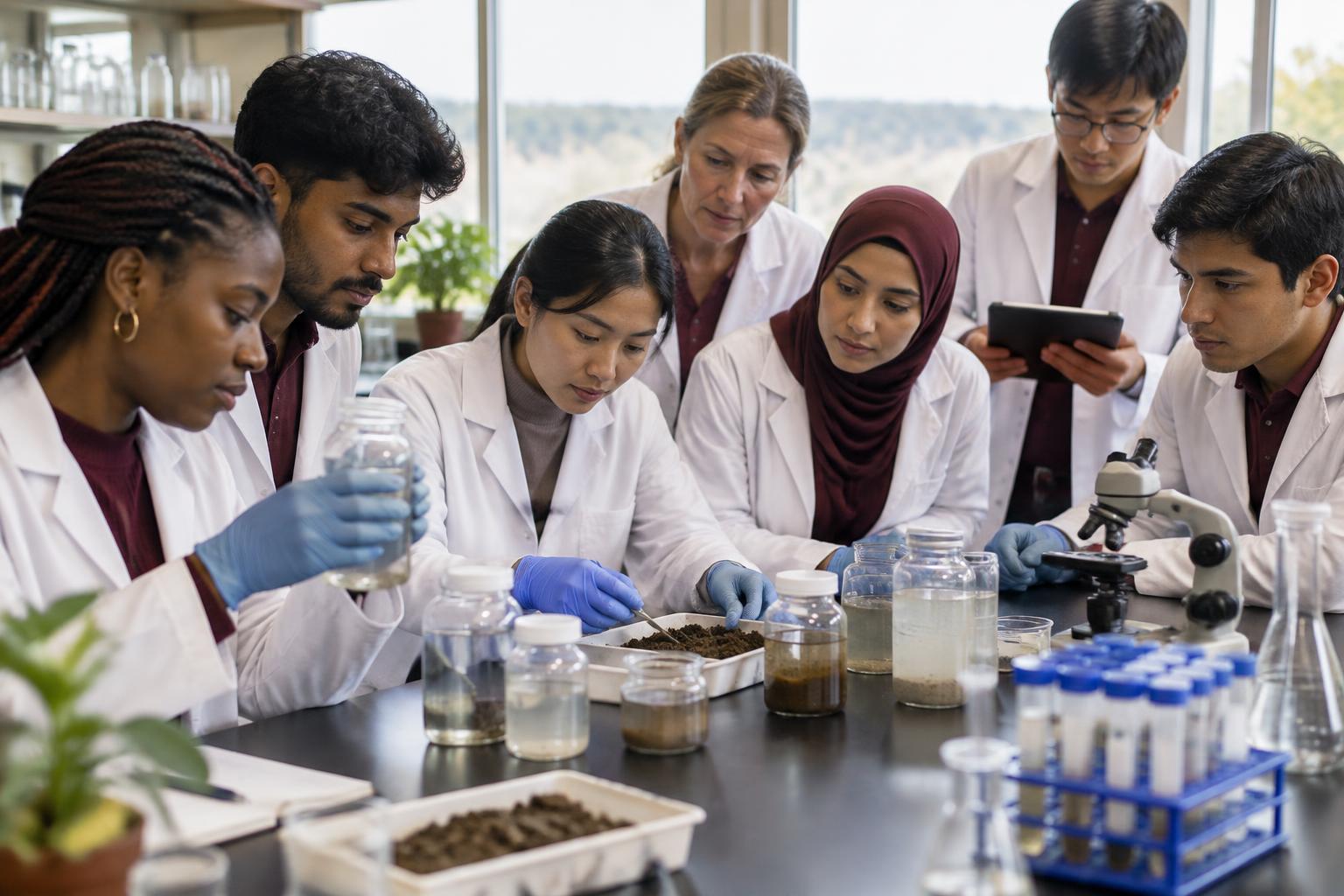
Student researchers and a faculty mentor examining environmental samples
Research

Questions first. Centres later.

A research group at Forward is formed around a question and a method, not around a title. Here are the questions the university intends to be judged on.

Stated plainly
  • 01Forward has published no research papers, because no research group has yet been convened. This page states what the university intends to work on and how it will be judged.
  • 02Research groups are formed around a question and a method, not around a professor's title. A group that cannot state its question in one sentence does not get funded.
  • 03Every group is expected to produce work that a Ugandan or regional institution can use, and to publish negative results rather than quietly abandoning them.
  • 04Undergraduate students are attached to groups from their second year, and that attachment is assessed under the Forward Core quantitative requirement.

The founding agenda

Ten questions. Methods before titles.

01
AI & Computing

How well do modern language models work for African languages with little written data, and what breaks first?

Approach
Build evaluation sets in named languages, publish the failure modes, and test whether smaller task-specific models beat large general ones on local tasks.
What counts as an output
Open evaluation sets, reproducible benchmarks, and a documented cost floor for running these systems on regional infrastructure.
See this School →
02
Energy, Climate & Earth Systems

What actually causes distribution-level electricity failures in fast-growing East African cities, and which interventions pay back fastest?

Approach
Instrument feeders, collect outage data with utility partners, and model interventions against measured demand instead of imported assumptions.
What counts as an output
Measured outage datasets, ranked intervention costings, and a public methodology other utilities can copy.
See this School →
03
Agriculture & Food Systems

Where is value lost between a smallholder harvest and an urban plate, and which losses are engineering problems rather than market problems?

Approach
Trace specific crops through real supply chains with weight, time and temperature measurement at each hand-off.
What counts as an output
Loss maps per crop, tested low-cost storage and handling interventions, and honest reporting where an intervention failed.
See this School →
04
Health & Bioengineering

How do you deliver diagnostic capability to district facilities that will never have a specialist on site?

Approach
Evaluate point-of-care instruments and referral workflows under real staffing constraints, with clinicians as co-authors rather than subjects.
What counts as an output
Workflow evidence, device evaluations under field conditions, and training material usable by existing staff.
See this School →
05
Intelligent Engineering

Which locally producible building materials and methods reduce cost and embodied carbon without reducing service life?

Approach
Laboratory testing paired with instrumented buildings on the Forward campus itself, so the estate is the first test case.
What counts as an output
Published material test data, campus performance readings, and specification guidance for regional builders.
See this School →
06
Governance & Law

What makes a public institution in the region deliver, and what makes an identical one fail?

Approach
Comparative case work with administrative data, focused on procurement, staffing rules and information flow rather than on political personality.
What counts as an output
Case studies with data appendices, and policy notes written for the officials who would have to implement them.
See this School →
07
Energy, Climate & Earth Systems

Can a machine maintain infrastructure that no technician can reach in time?

Approach
Test offline-first inspection drones, ground rovers and robotic cleaning on the planned Forward campus micro-grid and, subject to agreement, partner solar installations.
What counts as an output
Measured fault-detection rates, cost-per-inspection against a human baseline, and open hardware specifications.
See this School →
08
Health, Life Sciences & Bioengineering

What can a robot do in a district facility that will never have a specialist on site?

Approach
Evaluate sample-handling, assistive devices, tele-operated ultrasound guidance and cold-chain delivery in the planned clinical simulation lab and, subject to agreement, partner district facilities.
What counts as an output
Workflow evidence under real staffing constraints, device evaluations, and training material for existing staff.
See this School →
09
Agriculture, Food Systems & Agricultural Technology

Which losses between a harvest and a plate are engineering problems?

Approach
Trial small-plot weeding, selective harvest, soil and pest sensing, crop intelligence and post-harvest automation on the planned demonstration farm and, subject to agreement, partner cooperatives.
What counts as an output
Loss maps per crop, field-trial yield data, and honest reporting where an intervention failed.
See this School →
10
Education Futures

Does a robot in a classroom teach anything a screen cannot?

Approach
Compare locally manufacturable classroom kits, embodied tutoring and teacher robotics training in consenting partner secondary schools and the School of Education Futures.
What counts as an output
Learning-gain measurement against control classrooms, open kit designs, and teacher curricula.
See this School →

Work with Forward

Partner on a question.

Forward is looking for employers, utilities, clinics and public bodies willing to share real data and real constraints. Those partnerships also generate the paid cooperative-education placements every student must complete.